Your GP orders a blood test. Off you go to a lab testing facility. The results come through and your GP asks to see you to follow-up. Do you live near a lab? What if you live deep in the rural sector? Can you get to a lab before or after work? Do you need time off work? When can you fit in another talk with your GP? Can you afford to pay your GP twice?
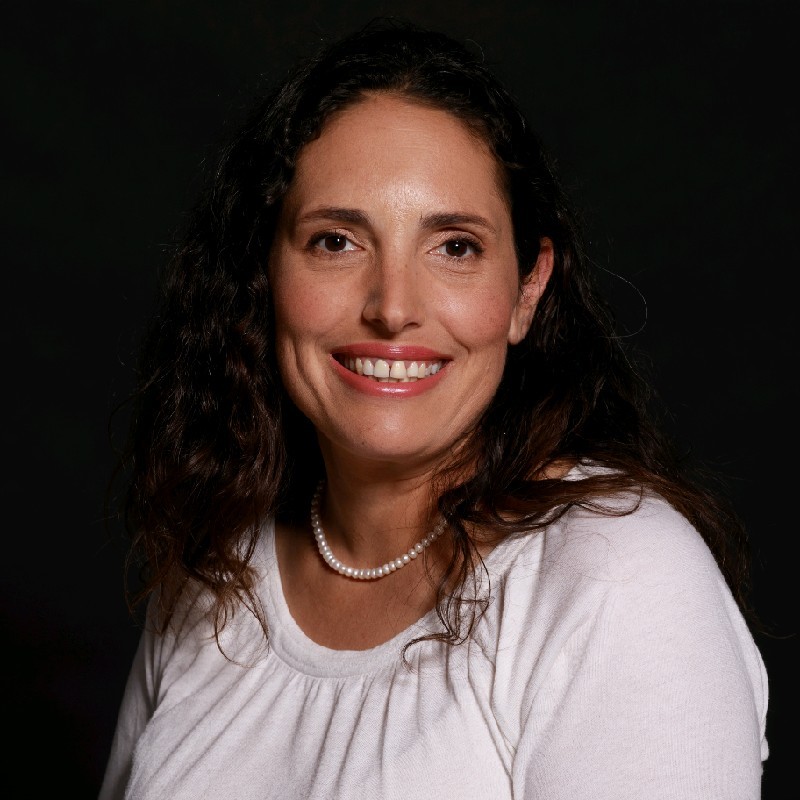
“With around 70 per cent of diagnostic decisions based on a lab test, that’s far too much lost time for both the patient and their GP. We can change that,” says Professor Cather Simpson, CEO of Orbis Diagnostics, a spinout from the University of Auckland.
“We are commercialising a desktop-sized medical testing platform that delivers the scalability, accuracy, quantification, and robust repeatability of a medical lab test in a 30-minute test at the point of care. Our use of photonics will deliver clinically accurate blood test results from a single microsample of blood,” says Simpson.
“We like to call it the Nespresso version of diagnostics. Instead of that GP/lab test runaround, a patient could do a fingerstick on their way into a surgery and by the time they see the GP, the results are through. It could also be rolled out in pharmacies and supermarkets, and has potential in other areas, including large and companion animal health, emergency rooms, cruise ships and remote areas,” says Simpson.
“Aside from the obvious efficiencies, this could also help reduce stress caused by waiting for results and another GP visit. The Orbis approach also enables what is now a global drive to democratise medicine, remove barriers, and reduce the pressure on GPs and other health professionals, hospitals and pharmacies.”
We already have many forms of point-of-care testing – home pregnancy, blood glucose, COVID-19 antigens – but most test for just a single biomarker or a collection of similar tests, meaning they can’t replace the labs for a standard set of blood tests.
“We plan to automate the testing of antibodies, antigens, enzymes, and blood chemistry, rapidly, with the same quality as a central laboratory,” says Simpson.
The now-disgraced Theranos approach also proposed using a single drop of blood. Simpson says they got the business model right; it was the science that evaded them. Orbis has the science.
The journey to Hep B began with what Simpson jokingly refers to as point-of-cow diagnostics.
“Professor David Williams and I were looking at the 10-thousand-odd components of milk every cow, every milking as a way to add value to dairy farmers’ products.
We were successfully measuring a whole range of things were filing our first patent and were well on our way to success when COVID-19 hit in 2020. The country, and the university, went into lockdown, so we were dead in the water. So, we did what a sensible startup would do and accelerated our goals to move into human diagnostics.”
“Like many, we really wanted to do something about the pandemic. Very rapidly, the team developed a fingerstick test to measure COVID-19 antibodies, built an instrument, and performed a clinical study with Air New Zealand pilots and crew. They were some of the first groups to be vaccinated, and we could measure the status of their antibody protection.” The success with the COVID-19 antibody test led Orbis in the direction of infectious disease.
Now, Orbis is tackling the world’s deadliest virus – Hepatitis B – which causes half of all liver cancers. Worldwide, two billion people have been infected with the Hepatitis B virus and over a million people die each year from the disease. Hep B infection has particularly tragic consequences for babies - 70-90 per cent of children born to Hep B-positive mothers become chronically infected, and many will die in their 30s or 40s from cirrhosis or liver cancer. In their 2023-2024 annual report, the New Zealand Hepatitis Foundation said almost 94,000 New Zealanders are estimated to have Hep B, with an estimated 200-300 people dying each year from related liver diseases.
Many people are unaware they have Hep B because it is a silent disease. “This is where Orbis comes in – 87 percent of the 250 million people globally who have chronic Hep B are undiagnosed, and there are no FDA-cleared tests for Hep B that can be rolled out at point-of-care.” Orbis has now developed the world’s first point-of-care test that checks all three required blood markers—in just 30 minutes. Their first clinical study confirmed lab-level accuracy. “We are planning to roll out the Orbis HBV Triplex Assay in the US, to meet the 2023 call by the US Centers for Disease Control for universal screening of all adults for these three blood markers for Hep B status.”
Orbis now has provisional ethics approval for a second clinical study here in New Zealand as part of its journey towards FDA approval and commercialisation.
The company is raising NZ$8.9 million in capital to build out their US presence, finalise product development and prepare for a pivotal trial in the US in early 2027.
Meanwhile, Simpson, Williams and colleagues are now developing a pipeline of diagnostic panels to make their diagnostic system multimodal, multiplexed and useful for just about every condition. The Orbis team has big goals beyond the clinic and other medical settings. “I’d love to give people the opportunity to monitor their health and wellbeing themselves. We can do height, weight, pulse rate … why can’t we measure our own cholesterol levels? Orbis is on track to put blood diagnostics at everyone’s fingertips.”
See more here
.jpg)