Design and manufacturing in Medtech doesn’t always fit neatly within a single industry box. Some of the strongest solutions come frombringing in expertise from other sectors like design and manufacturing.
We also need to do it early, to avoid costly development risks, strengthen product development decisions and build a clearer pathway from prototype to real-world impact.
Early in professional life, I saw how a piece of PVC piping changed the New Zealand milking industry and heralded the introduction of robotic milking and farm automation, or an Agee jam jar (if you’re under 60, you probably don’t know what this is) formed the foundational technology that brought Fisher & Paykel Healthcare to the world.
These were homegrown developments in a very different and far smaller world where our focus was, largely, on our home market – with unexpected implications on the world stage. Many of our medtech developments now have global market potential but feel constrained by the so-called tyranny of distance: New Zealand is too far away from key global markets. No, we are not.
The Lord of the Rings showed that distance need not limit global impact. Its success was underpinned by sophisticated high-value digital production, in the form of motion capture and character animation, alongside animatronics and digital fabrication. This capability has helped drive major developments in visual effects and film production, creating lasting value for New Zealand’s screen sector and digital economy. The films also strengthened New Zealand’s Tourism sector, attracting international visitors to the locations where they were made, extending their impact well beyond the screen.
Rocket Lab offers another example. Alongside Sir Peter Beck’s vision and leadership, its success reflects three distinctly New Zealand advantages:. thecross-sector knowledge exchange between aerospace and marine industries, particularly in advanced composites ; the use of 3D printing for enhanced development agility and production speed; and ironically, New Zealand’s geographic isolation, which provides the clear air and sea space needed for safe launch operations.
Both examples leap-frogged off the backs of the inventiveness and resourcefulness of their founders – Sir Peter Beck, Sir Peter Jackson and Sir Richard Taylor – and inspire confidence in the future of medtech in New Zealand.
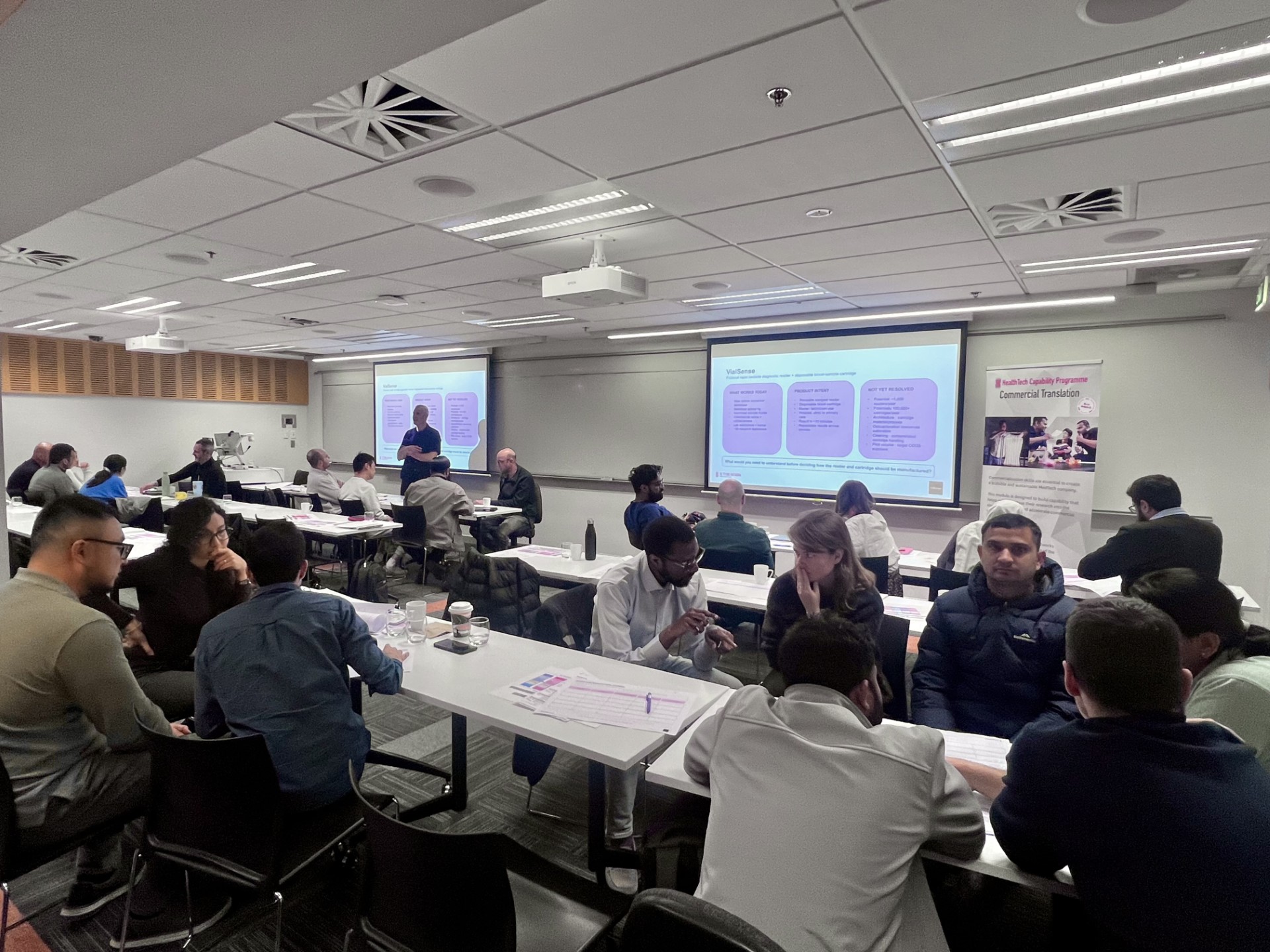
Later this month, I’ll be coordinating Te Tītoki Mataora’s Design for Manufacture in Medical Device Development workshop. The workshop will explore how medtech teams can draw on expertise from design, engineering and manufacturing alongside regulatory specialists and clinical collaborators to strengthen product decisions and create market-ready medical devices.
Design for Manufacture is not an aesthetic afterthought. It means considering early how amedical technology will be manufactured, scaled and successfully delivered to clinicians and patients. Cross-sector collaboration can bring new materials, processes and ways of thinking into medtech, helping teams reduce costly rework and move more confidently from research to real-world impact.
Simon Fraser is a Professor at the School of Design Innovation at Victoria University Wellington with a background in industrial design for world-leading brands. He has connections across the New Zealand medtech industry and is Co-chair of the Consortium for Medical Device Technologies (CMDT).